

3D GenAI Gaussian Splatting

3D GenAI Gaussian Splatting: Revolutionary AI-Powered 3D

The convergence of artificial intelligence and 3D reconstruction has reached a pivotal moment with 3D GenAI Gaussian Splatting. This groundbreaking technology transforms how we generate photorealistic 3D models from simple 2D images, representing a quantum leap beyond traditional photogrammetry methods. As industries from e-commerce to architecture seek efficient 3D GenAI Gaussian Splatting solutions, platforms like Solaya‘s advanced Gaussian Splatting technology are democratizing access to enterprise-grade 3D generation.

Unlike conventional 3D modeling that requires extensive manual labor or expensive scanning equipment, 3D GenAI Gaussian Splatting leverages neural radiance fields and point cloud optimization to create immersive 3D experiences in minutes rather than days. This article explores the technical foundations, practical applications, and implementation strategies for 3D GenAI Gaussian Splatting, with specific focus on how Solaya streamlines this workflow for businesses of all sizes.

Why 3D GenAI Gaussian Splatting is Transforming Digital Content Creation

Traditional 3D content creation faces three critical bottlenecks: time, cost, and expertise. Professional 3D modeling requires specialized software knowledge and can take days to produce a single high-quality asset. 3D GenAI Gaussian Splatting eliminates these barriers by automating the reconstruction process through AI-driven algorithms.

The Business Case for 3D GenAI Gaussian Splatting

Organizations implementing 3D GenAI Gaussian Splatting report dramatic efficiency gains:

  • E-commerce platforms reduce product photography costs by 60-80% while increasing conversion rates through interactive 3D viewers
  • Real estate agencies create virtual property tours in under 30 minutes using Solaya real estate solutions
  • Manufacturing companies generate digital twins for maintenance documentation without CAD expertise
  • Cultural heritage institutions preserve artifacts through photorealistic 3D digitization

The scalability of 3D GenAI Gaussian Splatting makes it particularly valuable for businesses needing to process hundreds or thousands of objects. Rather than hiring 3D artists at $50-150/hour, companies can leverage automated solutions like Solaya to process entire product catalogs at a fraction of the cost.

Latest breakthroughs and announcements

FastGS: training acceleration (November 2025)

FastGS is not just an upgrade—it’s a revolution. By slashing training times down to just 100 seconds for static scenes, FastGS redefines what’s possible in 3D GenAI Gaussian Splatting. This framework delivers 2 to 15 times faster training across a wide range of tasks, including:

  • Dynamic scene reconstruction
  • Surface reconstruction
  • Sparse-view scenarios
  • Large-scale reconstruction
  • SLAM applications

The secret sauce? Multi-view consistent densification (VCD) and pruning (VCP). These strategies intelligently manage Gaussian primitives based on their importance in multi-view reconstruction quality. The result is a 77% average reduction in Gaussian count—and in some cases, up to 80%—without sacrificing visual fidelity.

NVIDIA NuRec Gaussian Splatting libraries (August 2025)

Announced at SIGGRAPH 2025, NVIDIA’s Omniverse NuRec suite is a game-changer. Featuring ray-traced 3D Gaussian Splatting powered by NVIDIA’s proprietary 3D Gaussian Unscented Transform, NuRec allows developers to:

  • Capture real-world environments from sensor data
  • Reconstruct and simulate with high fidelity
  • Integrate neural rendering into Omniverse workflows

This innovation is particularly impactful for robotics, industrial simulations, and autonomous vehicle development, where precision and realism are paramount.

Current problems being solved in 2025

Geometric accuracy and real-time rendering

One of the biggest hurdles in 3D GenAI Gaussian Splatting has been integrating it into real-world workflows. That’s changing fast. Enhanced GS methods now include normal attributes and depth optimization, improving geometric accuracy dramatically. A deferred rendering pipeline tailored for GS enables:

  • Dynamic relighting
  • Shadow mapping
  • Compatibility with Unity and Unreal Engine

These improvements eliminate common artifacts like floaters and texture holes, making GS viable for commercial applications and immersive XR experiences.
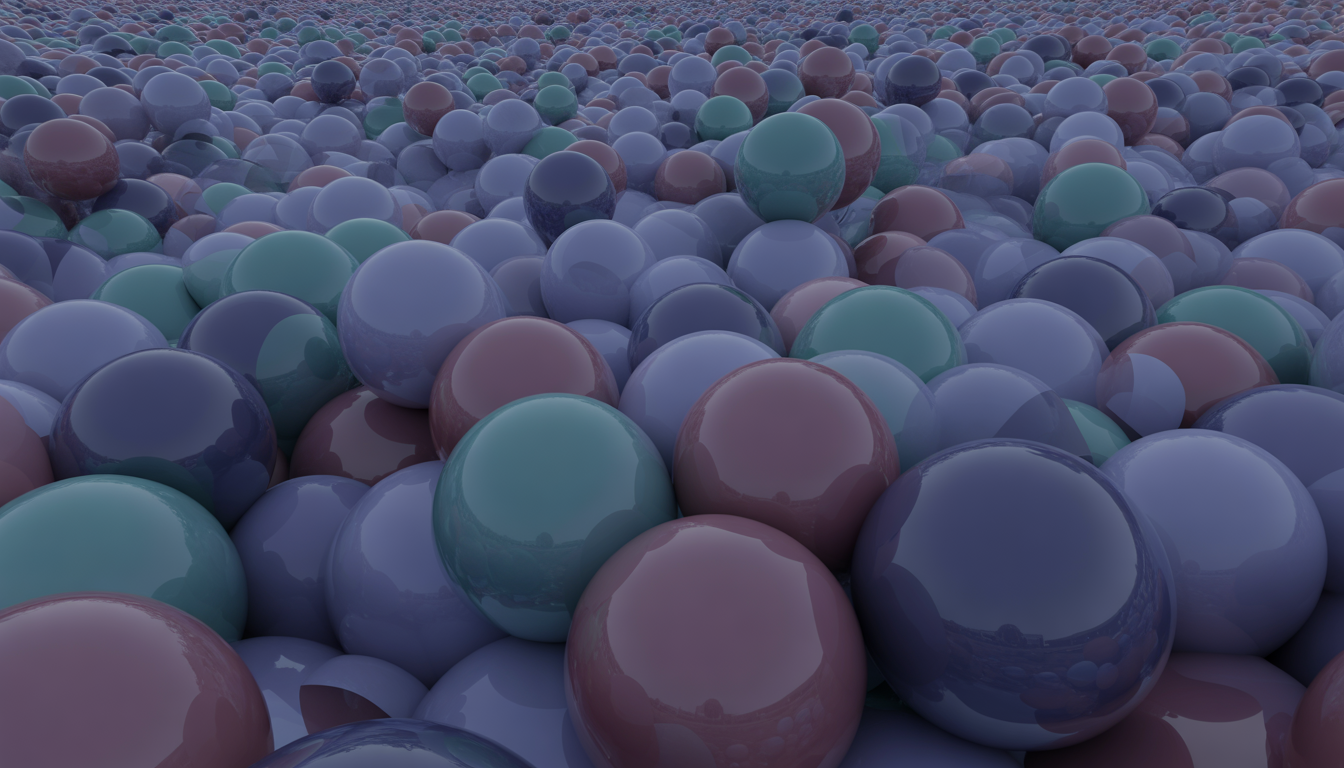
Mon image

Uncertainty quantification for safety-critical applications

Amazon Science has stepped in to address a critical issue: the unpredictable failure of 3D-GS in robotics. Their new algorithm probabilistically updates and rasterizes semantic maps within GS, enabling:

  • Per-pixel segmentation predictions
  • Quantifiable uncertainty metrics

This is a major leap forward for safety-critical systems like autonomous navigation and robotic manipulation.

Scene dynamics and incremental updates

CL-Splats, introduced in October 2025, tackles the challenge of updating 3D representations without re-optimizing entire scenes. It features a robust change-detection module that:

  • Segments updated and static components
  • Enables focused local optimization

This makes it ideal for applications like real-time 3D scanning and dynamic environment mapping.

Concrete benefits for users right now

  • Speed: Training times reduced from hours to 100 seconds
  • Efficiency: 77–80% reduction in Gaussian primitives
  • Visual quality: Photorealistic results with dynamic shadows and lighting
  • Real-time performance: Optimized pipelines for modern GPUs
  • XR/VR enhancement: Seamless blending of real and virtual assets
  • Reliability: Uncertainty metrics for safety-critical systems

Practical use cases and recent examples (2025)

Live broadcasting and virtual environments

Thanks to geometry-enhanced GS methods, broadcasters can now appear in any virtual environment with real-time relighting. This opens new doors for immersive storytelling and interactive media.

Robotics and simulation

With NVIDIA’s NuRec, developers can reconstruct physical environments from sensor data, creating highly accurate digital twins for robotics and autonomous vehicles. This is particularly useful for industrial training and predictive maintenance.

Dynamic scene reconstruction

FastGS proves its versatility across dynamic and surface reconstruction tasks, offering state-of-the-art performance on complex benchmarks. It’s already being used in 3D object scanning and SLAM-based navigation systems.

Implementing 3D GenAI Gaussian Splatting: Practical Workflow Guide

Successfully deploying 3D GenAI Gaussian Splatting requires careful attention to data capture and processing parameters. Here’s a production-ready workflow:

Step 1: Image Capture Best Practices for 3D GenAI Gaussian Splatting

  • Quantity: Capture 30-80 images for standard objects, 100-200 for complex scenes
  • Overlap: Maintain 60-80% overlap between consecutive images
  • Lighting: Use diffuse, even lighting to avoid harsh shadows that confuse the 3D GenAI Gaussian Splatting algorithm
  • Resolution: Minimum 1920×1080, ideally 4K for detail preservation
  • Movement pattern: Circular orbit for objects, grid pattern for environments

Step 2: Processing with 3D GenAI Gaussian Splatting Platforms

Cloud-based solutions like Solaya.ai streamline the entire 3D GenAI Gaussian Splatting pipeline (https://solaya.ai/getting-started) through intuitive interfaces:

  1. Upload: Drag-and-drop your image set or connect directly to storage APIs
  2. Configure: Set reconstruction parameters (detail level, optimization iterations, background removal)
  3. Process: Automated 3D GenAI Gaussian Splatting runs on GPU clusters (5-15 minutes typical)
  4. Review: Interactive 3D viewer for quality validation
  5. Export: Download in multiple formats (.ply, .splat, web viewer embed code)

For developers requiring API integration, Solaya.ai provides RESTful endpoints that accept image batches and return processed 3D GenAI Gaussian Splatting models in under 10 minutes—perfect for e-commerce platforms processing thousands of products monthly.

Motion-blurred image reconstruction

The Bi-Stage 3D Gaussian Splatting framework solves a long-standing problem: reconstructing 3D scenes from motion-blurred images. This is a breakthrough for drone footage, handheld cameras, and other motion-heavy scenarios.

Key market statistics and performance metrics (2025)

  • Training speed improvement: 2–15x faster across tasks
  • Gaussian reduction: 77% average, up to 80% with VCD
  • Rendering performance: Maintains real-time speeds with complex lighting
  • Benchmark performance: Sub-second training with compact models

Future directions being explored (2025)

  • Material decomposition: Separating albedo, material properties, and lighting for physically-based relighting
  • Geometric enhancement: Using 2D GS priors and deep learning for refined reconstructions
  • AIGC integration: Leveraging generative AI for scene reconstruction from sparse inputs
  • Uncertainty-aware dynamics: Propagating motion cues for enhanced 4D reconstruction

As we move toward 2026, the fusion of generative AI and 3D Gaussian Splatting is poised to redefine how we capture, simulate, and interact with the world around us. From robotics to entertainment, the possibilities are expanding faster than ever—and we’re only just beginning to scratch the surface.


3D GenAI Gaussian Splatting

As of November 18, 2025, the 3D GenAI Gaussian Splatting landscape has evolved rapidly, with a surge in interest from developers, artists, and researchers alike. Over the past 30 days, English-speaking users have actively explored this technology across forums, social media, and technical communities. This article offers a comprehensive analysis of the most pressing questions, current user behaviors, and emerging trends surrounding 3D GenAI Gaussian Splatting, based on recent discussions and available data.

Most asked questions about 3D GenAI Gaussian Splatting (November 2025)

Across platforms like Reddit, Quora, and Discord, several recurring questions have emerged. These reflect both curiosity and technical challenges faced by users experimenting with or deploying Gaussian Splatting in real-world scenarios.

  • “How to generate 3D Gaussian splats from text prompts?” — This is one of the most frequent queries, especially regarding tools like VIST3A and other text-to-3DGS models. Users want to know if these systems are stable, accessible, and production-ready.
  • “Can Gaussian Splatting be used for real-time animation in games?” — Game developers are exploring how to integrate animated splats into engines like Unity and Unreal without compromising performance.
  • “What are the best tools for distributed training of 3D Gaussian Splatting?” — With GPU limitations still a bottleneck, many are turning to frameworks like Grendel or multi-GPU setups to scale their training.
  • “How to relight Gaussian Splatting scenes after capture?” — Artists are seeking more control over lighting in post-production, especially for cinematic or photorealistic outputs.
  • “Is Gaussian Splatting compatible with LiDAR or photogrammetry workflows?” — Integration with real-world data sources is a hot topic, particularly for digital twins and urban reconstruction.
  • “How to reduce artifacts in Gaussian Splatting (floaters, holes)?” — Technical discussions often revolve around artifact reduction and improving surface fidelity.
  • “Can I use Gaussian Splatting for avatars and digital humans?” — There’s a growing demand for realistic, animatable avatars using GS, especially in metaverse and XR applications.

Current problems users are trying to solve

While the technology is promising, users are still facing several challenges when implementing 3D GenAI Gaussian Splatting in production environments.

  • Geometric quality optimization: Reducing floaters, holes, and surface distortions remains a top priority, especially for urban scenes and character models.
  • Pipeline integration: Many are working to integrate GS into professional workflows using Unity, Unreal, or Blender, while maintaining performance and compatibility.
  • Animation and dynamics: Users want to animate splats without sacrificing quality or fluidity, particularly for human motion or object interactions.
  • Memory and scalability: GPU memory remains a limiting factor, especially for high-resolution captures or large-scale scenes.
  • Relighting and post-processing: Artists seek tools to adjust lighting, materials, and ambiance after the initial capture.
  • Dynamic scene updates: There’s a strong need for local scene editing without full recomputation, with solutions like CL-Splats gaining traction.

What users want to do after finding the information

Once users gather the information they need, their next steps are often action-oriented and practical. The community is highly engaged in testing, building, and sharing.

  • Test real-world workflows: Tutorials and ready-to-use examples are in high demand, such as “How to set up Grendel for distributed training?”
  • Integrate GS into projects: Many are applying GS to real applications like games, avatars, and immersive experiences.
  • Compare tools and methods: Users are benchmarking GS against NeRF, traditional mesh pipelines, and other generative models.
  • Share results: Platforms like Reddit, Discord, and GitHub are filled with shared experiments, tips, and troubleshooting advice.
  • Seek technical help: After testing, users often turn to forums for support, especially when encountering bugs or performance issues.

Current doubts and objections

Despite the excitement, skepticism remains. Users are asking critical questions about the viability, legality, and accessibility of Gaussian Splatting.

  • “Is Gaussian Splatting really better than NeRF or traditional 3D?” — Many are unsure whether GS offers a significant advantage in quality or flexibility.
  • “Is it ready for production?” — Professionals hesitate to adopt GS for large-scale commercial projects due to stability concerns.
  • “What about IP and legal issues with AI-generated splats?” — Legal clarity is lacking, especially when splats are generated from public datasets or AI models.
  • “Can I trust the realism for photorealistic work?” — Artists want assurance that GS can deliver broadcast-quality visuals.
  • “Is it too complex for beginners?” — The learning curve is steep, and many newcomers feel overwhelmed by the technical setup.

User expertise level in 2025

The current user base is a mix of experienced professionals and curious newcomers, each with distinct needs and expectations.

  • Intermediate to expert majority: Most discussions are led by 3D artists, developers, and researchers with technical backgrounds.
  • Growing beginner interest: More newcomers are entering the space, looking for simple explanations and plug-and-play tools.
  • Experts seek advanced optimization: Topics like distributed training, geometry enhancement, and relighting dominate expert forums.
  • Beginners seek clarity: They want clear workflows and accessible tools to get started without deep technical knowledge.

Related and trending searches (this week/month)

Search trends reflect the growing interest in practical applications and comparisons with other 3D generation methods.

  • “3D Gaussian Splatting vs NeRF”
  • “Gaussian Splatting Unity Unreal”
  • “Gaussian Splatting animation workflow”
  • “Gaussian Splatting distributed training”
  • “Gaussian Splatting relighting”
  • “Gaussian Splatting avatar”
  • “Gaussian Splatting LiDAR”
  • “Gaussian Splatting text to 3D”
  • “Gaussian Splatting artifacts fix”
  • “Gaussian Splatting commercial use”

Frequently Asked Questions About 3D GenAI Gaussian Splatting

How many images are needed for effective 3D GenAI Gaussian Splatting?

Quality 3D GenAI Gaussian Splatting results typically require 30-80 well-captured images for small to medium objects. Complex scenes or environments may need 100-200 images. Advanced platforms like Solaya can produce acceptable results from as few as 15 images  using AI fill-in techniques, though more images always improve quality.

What’s the difference between 3D GenAI Gaussian Splatting and traditional photogrammetry?

Traditional photogrammetry generates polygon meshes through multi-view stereo algorithms, while 3D GenAI Gaussian Splatting represents scenes as optimized point clouds of 3D Gaussians. The Gaussian representation enables real-time rendering without mesh conversion, making it ideal for web-based 3D viewers and AR applications.

Can 3D GenAI Gaussian Splatting work with single images?

Pure 3D GenAI Gaussian Splatting requires multiple views. However, hybrid approaches combining generative AI models with Gaussian splatting (available through platforms like Solaya.ai) can extrapolate 3D geometry from 1-3 images, though with reduced geometric accuracy compared to multi-view capture.

What hardware is required for 3D GenAI Gaussian Splatting?

Training 3D GenAI Gaussian Splatting models requires NVIDIA GPUs with 8GB+ VRAM (RTX 3070 or better). However, cloud platforms like Solaya eliminate local hardware requirements entirely, processing reconstructions on enterprise GPU clusters accessible via web browser.

How does 3D GenAI Gaussian Splatting compare in cost to hiring 3D artists?

Professional 3D modeling costs $50-150 per hour, with simple products taking 4-8 hours ($200-1200 per asset). 3D GenAI Gaussian Splatting through automated platforms reduces this to $5-20 per model, representing 95%+ cost savings for businesses processing multiple assets.

New concerns since August 2025

Several new questions have emerged in the last few months, reflecting the evolving nature of the technology and its applications.

  • “How to handle dynamic scenes and changes in Gaussian Splatting?” — Users want to update scenes without full recomputation, using tools like CL-Splats or USplat4D.
  • “Can Gaussian Splatting be used for generative AI (text-to-3D, image-to-3D)?” — There’s high demand for models like VIST3A that bridge AIGC and GS.
  • “How to ensure identity preservation in Gaussian Splatting avatars?” — Fidelity and realism are key for avatars, especially in social VR or digital identity use cases.
  • “What about uncertainty and motion in 4D Gaussian Splatting?” — Frameworks like USplat4D are being explored for dynamic, time-based scenes.
  • “Is Gaussian Splatting ready for metaverse and spatial computing?” — Developers and companies are evaluating GS for immersive and interactive environments.

Summary of current user intent (November 2025)

In summary, users are looking for concrete, accessible workflows that integrate with professional tools like Unity, Unreal, and Blender. They want to solve technical challenges such as artifact reduction, memory optimization, animation, and relighting. Interest is growing in dynamic scene generation and generative AI applications. However, doubts remain about the maturity, quality, and legal implications of using Gaussian Splatting in commercial projects. Beginners seek simple tutorials and tools, while experts demand advanced optimization and integration strategies.

To explore how 3D and AI are transforming visual creation, you can also read this in-depth article on 3D visuals and e-commerce. For further technical insights, we recommend checking out NVIDIA’s research on Gaussian Splatting and the original paper on 3D Gaussian Splatting.