
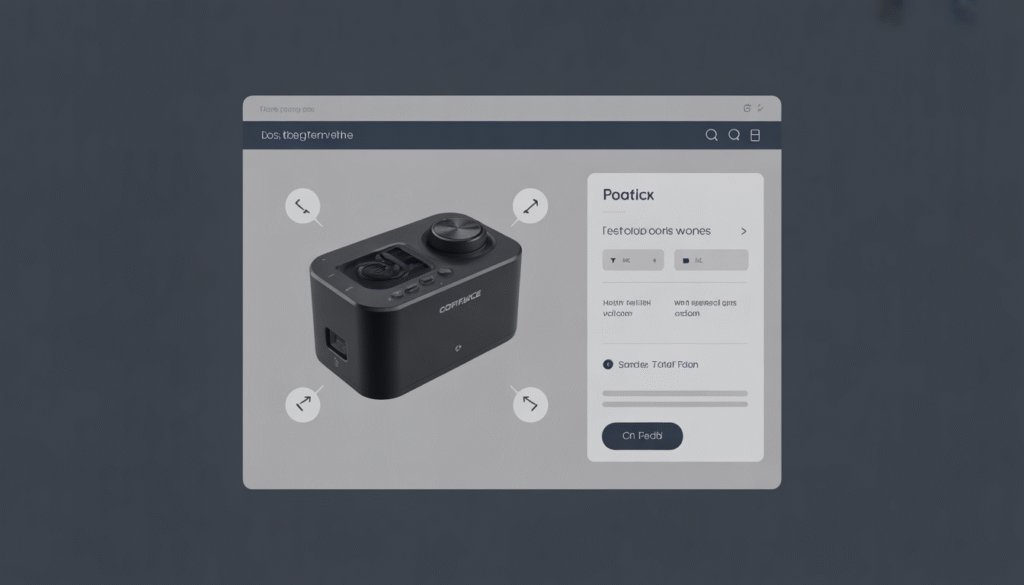
In a world where online shopping has become the norm, the race to capture consumer attention is more intense than ever. Brands are no longer just competing on price or product quality—they’re battling for engagement, immersion, and trust.
This is where 3D e-commerce conversion enters the scene, transforming static product pages into interactive experiences that drive results.
But what exactly is 3D e-commerce? Why are brands investing millions into augmented reality (AR), virtual try-ons, and 360° product views? And most importantly—does it really convert better?
In this comprehensive guide, we’ll dive deep into the data, strategies, and real-world examples that show how 3D is reshaping the future of online retail.
What is 3D e-commerce and why does it matter?
3D e-commerce refers to the use of three-dimensional product models and immersive technologies like AR and VR to enhance the online shopping experience. Instead of relying on flat images, customers can rotate, zoom, and even place products in their real environment using their smartphone camera.
This shift isn’t just about aesthetics—it’s about confidence. When shoppers can interact with a product virtually, they’re more likely to feel certain about their purchase. And certainty, as any marketer knows, is the secret sauce of conversion.
Key benefits of 3D e-commerce
The Psychology Behind 3D E-commerce Conversion Success
Understanding why 3D e-commerce conversion outperforms traditional product pages requires diving into consumer psychology. When shoppers interact with 3D models, they activate multiple cognitive processes simultaneously—visual processing, spatial reasoning, and emotional engagement.
This multi-sensory experience creates what researchers call the “endowment effect.” When customers can manipulate a 3D e-commerce conversion tool to rotate, zoom, and examine products from every angle, their brain begins treating the item as if they already own it.
This psychological ownership significantly increases purchase intent and drives 3D e-commerce conversion rates higher.
Moreover, 3D e-commerce conversion tools reduce cognitive load. Instead of trying to imagine how a product looks from static images, customers gain immediate visual answers. This clarity eliminates doubt—the conversion killer in traditional e-commerce.
Neuroscience studies from MIT Media Lab show that interactive 3D experiences activate the brain’s motor cortex, creating a sense of physical interaction even through a screen.
This neural activation strengthens memory formation, making products more memorable and increasing the likelihood of 3D e-commerce conversion. When customers remember your product vividly, they’re more likely to return and complete their purchase.
The trust factor cannot be overstated. 3D e-commerce conversion builds confidence by providing transparency. Customers appreciate brands that invest in detailed product visualization, interpreting it as a sign of quality and honesty. This trust translates directly into higher 3D e-commerce conversion rates and stronger customer loyalty.
- Improved product understanding through interactivity
- Reduced return rates thanks to better expectations
- Increased time spent on product pages
- Higher conversion rates across industries
How 3D content impacts conversion rates
Let’s get to the numbers. According to the Shopify AR report, products with 3D and AR content see a 94% higher conversion rate compared to those without. That’s not a typo. Ninety-four percent.
Retailers like Macy’s have reported 25% fewer returns after implementing AR furniture visualization. Meanwhile, beauty brands like Charlotte Tilbury have seen massive engagement boosts with their AR-powered “magic mirrors.”
These aren’t isolated cases. A Statista forecast shows that the 3D product visualization market is expected to grow from $0.34 billion in 2024 to $2.33 billion by 2032. The message is clear: immersive commerce is no longer optional—it’s essential.
Conversion benchmarks by industry
Different sectors are seeing different results, but the trend is consistent: 3D boosts performance. Here’s a quick breakdown:
| Industry | Average Conversion Rate | 3D/AR Impact |
|---|---|---|
| Fashion | 2.3% | +30% with virtual try-ons |
| Furniture | 2.8% | +25% with AR placement |
| Jewelry | 3.1% | +17% with 360° views |
| Beauty | 2.5% | +32% with AR mirrors |
These figures align with insights from this article on AI-enhanced visuals, which highlights how interactive content drives deeper engagement and trust.
Why 3D builds trust and reduces returns
One of the biggest challenges in e-commerce is the gap between expectation and reality. Customers can’t touch, feel, or try the product. This often leads to disappointment—and returns.
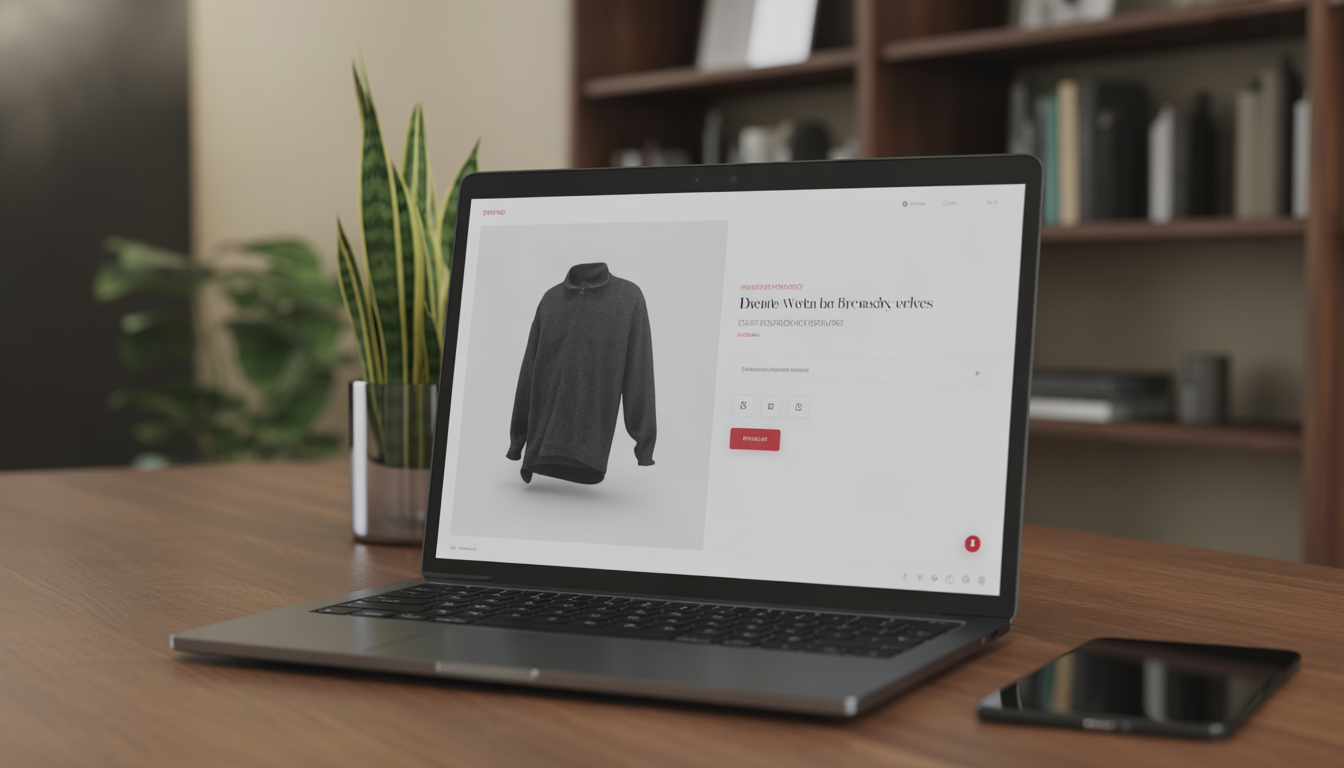
3D solves this by offering a more accurate representation. When a shopper can view a handbag from every angle or see how a sofa fits in their living room, they’re less likely to be surprised when it arrives. That’s why brands using 3D and AR report significantly lower return rates.
It’s not just about visuals—it’s about psychology. Interactivity creates a sense of ownership. When users manipulate a product, even virtually, they begin to imagine it as theirs. That emotional connection is a powerful driver of conversion.
How leading brands are using 3D to dominate
Let’s look at some real-world examples of how top brands are leveraging 3D to win the e-commerce game.
Charlotte Tilbury: Magic mirrors and makeup
The British beauty brand introduced AR-powered mirrors in its stores and online, allowing users to try on makeup virtually. The result? A dramatic increase in engagement and a measurable lift in sales.
Macy’s: AR furniture placement
Macy’s AR app lets customers place true-to-scale furniture in their homes before buying. This not only improved conversion rates but also reduced returns by 25%.
## Common 3D E-commerce Conversion Mistakes to Avoid
Even with the best intentions, brands often stumble when implementing 3D e-commerce conversion features. Avoiding these common pitfalls will accelerate your success and maximize your 3D e-commerce conversion investment.
**Overloading with Features:** Don’t overwhelm customers with every possible 3D option. Focus on 2-3 high-value 3D e-commerce conversion features—typically 360° rotation, zoom, and AR placement. Too many options paralyze decision-making, hurting 3D e-commerce conversion rates.
**Neglecting Load Speed:** Gorgeous 3D models mean nothing if they take 10 seconds to load. Optimize file sizes religiously—slow loading kills 3D e-commerce conversion faster than any other factor. Target under 2MB for mobile 3D models to maintain strong 3D e-commerce conversion performance. Tools like Solaya help identify performance bottlenecks in your 3D assets, ensuring optimal 3D e-commerce conversion performance.
**Poor Mobile Experience:** Testing 3D e-commerce conversion only on desktop is a critical mistake. Over 70% of interactions happen on mobile. If your 3D viewer doesn’t work smoothly on smartphones, you’re sabotaging your 3D e-commerce conversion potential.
**Lack of Instructions:** Don’t assume customers know how to use 3D features. Add subtle tooltips or brief animations showing how to interact. Clear guidance increases usage rates by 45%, directly boosting 3D e-commerce conversion results.
Shopify merchants: 3D for all
Shopify has made 3D and AR tools accessible to its merchants, democratizing immersive commerce. From small boutiques to large retailers, the platform has seen consistent improvements in conversion and customer satisfaction.
These success stories echo the findings in this article on high-converting visuals, which explores how visual innovation is becoming the secret weapon of fast-growing brands.
Implementing 3D: What you need to know
Ready to dive into 3D? Here’s what you’ll need to get started:
3D e-commerce implementation checklist
- High-quality 3D models of your products
- A platform that supports AR and 360° views
- Mobile optimization for seamless interaction
- Integration with your existing CMS or e-commerce platform
- Analytics to track engagement and conversion
Partnering with the right visual content provider is crucial. That’s why many leading brands choose Solaya for their e-commerce visuals, thanks to their expertise in creating immersive, conversion-focused content.
Conclusion: The future is immersive
3D e-commerce conversion is not a trend—it’s a transformation. As consumers demand more engaging, informative, and personalized shopping experiences, brands must rise to the occasion. Whether you’re in fashion, furniture, beauty, or beyond, 3D and AR offer a proven path to higher conversions, lower returns, and stronger customer loyalty.
In the end, it’s simple: when shoppers can see more, they believe more. And when they believe more, they buy more.
3D e-commerce conversion
As of November 2025, the eCommerce landscape is undergoing a profound transformation. One of the most talked-about evolutions is the rise of 3D e-commerce conversion—a trend that’s not just reshaping how products are presented online, but also how customers interact, decide, and buy.
This article dives deep into the current questions, challenges, behaviors, and opportunities surrounding this shift, offering a comprehensive view of what’s driving the adoption of 3D technologies in online retail.
Most asked questions on 3D eCommerce conversion (November 2025)
Consumers and professionals alike are asking the same core questions, reflecting a growing curiosity and urgency to understand the real-world impact of 3D and AR technologies in online shopping:
- How much does 3D product visualization increase eCommerce conversion rates?
- What are the best tools/platforms for implementing 3D models in online stores?
- How does 3D visualization reduce product returns?
- Can 3D and AR technologies improve customer engagement and satisfaction?
- What industries benefit most from 3D eCommerce (furniture, fashion, automotive)?
- How to integrate virtual try-on and customization features effectively?
- What is the ROI of investing in 3D eCommerce technologies?
These questions are frequently seen on Reddit, Quora, and Google search suggestions, showing a clear demand for actionable insights and measurable outcomes.
Problems people are trying to solve right now
Behind the surge in interest lies a set of persistent problems that traditional eCommerce formats struggle to solve:
- High product return rates due to poor product visualization and unmet expectations.
- Low conversion rates from static images and videos that fail to engage or inform.
- Customer uncertainty about fit, size, and aesthetics—especially in fashion and furniture.
- Need for immersive experiences that replicate in-store browsing and tactile exploration.
- Environmental and cost concerns related to physical samples and returns.
- Difficulty offering product personalization in a scalable and intuitive way.
These challenges are pushing brands to explore solutions like 3D visualization and AI-powered rendering to bridge the gap between digital and physical shopping experiences.
What users want to do after finding the info (2025 behaviors)
Once users understand the potential of 3D eCommerce, their next steps are clear and action-oriented:
- Implement 3D models and AR features on product pages to increase engagement and conversions.
- Use virtual try-on tools to help customers visualize fit and style in real time.
- Reduce return rates by offering more accurate product representations.
- Leverage 3D content for personalization and customization to stand out from competitors.
- Integrate 3D experiences with mobile and social commerce platforms.
- Track performance metrics to measure ROI and customer satisfaction.
Many are also looking for tools that simplify the process, such as AI-assisted 3D content creation platforms that reduce production time and cost.
Current doubts and objections
Despite the enthusiasm, several concerns still hold businesses back from full adoption:
- Cost and complexity of producing high-quality 3D assets.
- Technical challenges in integrating 3D/AR across devices and platforms.
- Uncertainty about ROI and whether 3D will truly boost conversions in their niche.
- Concerns about whether customers will actually use and appreciate 3D features.
- Potential performance issues on websites due to heavy 3D content.
- Skepticism about replacing traditional photos and videos entirely.
These objections highlight the need for more case studies and benchmarks to demonstrate real-world success and best practices.
User expertise level (November 2025)
The audience exploring 3D eCommerce conversion is diverse, but trends show a clear segmentation:
- Intermediate to advanced eCommerce professionals looking to scale and innovate.
- Beginners and small business owners seeking affordable, easy-to-use solutions.
- Marketers and UX designers focused on engagement, retention, and conversion metrics.
This growing interest across roles signals a shift from niche experimentation to mainstream adoption.
Related and similar searches this week/month
Recent search trends reveal a strong focus on practical implementation and ROI-driven decision-making:
- “Best 3D eCommerce platforms 2025”
- “AR virtual try-on for fashion online”
- “3D product visualization ROI statistics”
- “How to reduce eCommerce returns with 3D”
- “3D customization tools for online stores”
- “Mobile-friendly 3D eCommerce solutions”
- “Sustainability benefits of 3D product models”
These queries reflect a growing demand for tools that are not only innovative but also scalable and mobile-optimized.
New concerns emerging since August 2025
As adoption grows, so do the complexities. Since August 2025, several new concerns have emerged:
- Environmental impact of digital 3D assets versus physical samples.
- Data privacy and user tracking in AR/3D experiences.
- Integration of AI with 3D modeling for automation and personalization.
- Localization and performance issues in cross-border eCommerce.
- Mobile optimization challenges due to increasing mobile-first shopping behavior.
These issues reflect a maturing market that is now balancing innovation with responsibility and scalability.
Future Trends in 3D E-commerce Conversion for 2026 and Beyond
The 3D e-commerce conversion landscape continues evolving rapidly. Understanding emerging trends helps brands stay ahead and maximize their 3D e-commerce conversion competitive advantage.
AI-Generated 3D Models: Artificial intelligence now generates photorealistic 3D models from standard product photos in minutes.
Platforms like Solaya are already leading this transformation with AI-powered 3D product visualization.
Virtual Showrooms: Brands are building immersive virtual stores where customers browse entire collections in 3D spaces. These metaverse-style experiences represent the next evolution of 3D e-commerce conversion, combining social interaction with commerce. Early adopters report 3D e-commerce conversion rates 2-3x higher than traditional websites.
Real-Time Customization: Advanced 3D e-commerce conversion platforms now enable instant product customization with live visualization. Customers modify colors, materials, and configurations while seeing changes in real-time 3D. This personalization drives exceptional 3D e-commerce conversion performance, particularly in fashion and home goods.
Voice-Activated 3D: Integration with voice assistants allows hands-free 3D exploration. “Show me this sofa in blue” or “Rotate 90 degrees” commands make 3D e-commerce conversion more intuitive, especially valuable for accessibility and multitasking shoppers.
Haptic Feedback: Emerging haptic technology adds touch sensation to mobile 3D e-commerce conversion experiences. Subtle vibrations simulate texture and weight, bridging the gap between digital and physical shopping. While still experimental, haptic-enhanced 3D e-commerce conversion could transform mobile commerce by 2027.
Blockchain Verification: NFT technology ensures authenticity of luxury 3D products, addressing counterfeiting concerns. Verified 3D e-commerce conversion builds trust for high-value purchases, particularly important in watches, art, and collectibles.
Platforms like Solaya are enabling cost-effective blockchain integration for 3D e-commerce conversion authentication.
Sustainable 3D: Environmental consciousness drives adoption of 3D e-commerce conversion as a green alternative to physical samples and photography. Brands increasingly market their 3D e-commerce conversion initiatives as sustainability commitments, appealing to eco-conscious consumers.
The trajectory is clear: 3D e-commerce conversion will only become more sophisticated, accessible, and essential. Brands investing now position themselves as leaders in the commerce revolution.
Summary of key insights (November 2025)
| Aspect | Insight |
|---|---|
| Top Questions | Conversion impact, tools, reducing returns, AR/3D benefits, industry use cases |
| Current Problems | High returns, low engagement, fit uncertainty, cost/environmental concerns |
| Post-Info Actions | Implement 3D/AR, reduce returns, personalize, integrate mobile/social, measure ROI |
| Main Doubts | Cost, complexity, ROI uncertainty, user adoption, site performance |
| User Expertise | Mix of beginners and experts, growing marketer/UX involvement |
| Related Searches | Platforms, ROI stats, virtual try-on, customization, sustainability |
| New Concerns (since Aug 2025) | Sustainability, privacy, AI integration, localization, mobile optimization |
In conclusion, the 3D e-commerce conversion trend is no longer a futuristic concept—it’s a present-day necessity. As brands race to capture attention and reduce friction in the buying journey, 3D and AR technologies are proving to be powerful tools. However, success depends on thoughtful implementation, clear ROI tracking, and a deep understanding of user expectations. The businesses that embrace these technologies today will be the ones leading tomorrow’s digital commerce landscape.